The mobile computing landscape is undergoing a fundamental paradigm shift with the launch of the meta muse ai app. While the first wave of generative artificial intelligence focused primarily on text generation, summarization, and creative brainstorming, modern technology is rapidly transitioning into agentic execution. Developed by Meta, Muse is an autonomous AI assistant engineered to navigate, interact with, and execute complex tasks directly across third-party mobile applications on behalf of users.
Unlike conventional conversational chatbots that require continuous manual prompts, the meta muse ai app functions as an active digital coordinator. By bridging the gap between natural language comprehension and application programming interfaces (APIs), Muse can draft emails, synchronize calendar invites, book flights, and organize commerce orders across multiple services seamlessly. Explore how autonomous intelligence is redefining software in our guide to autonomous AI agents and our overview of the best AI productivity tools. This technical guide examines Meta Muse’s underlying architecture, security controls, and enterprise potential.
Table of Contents
Meta Enters the Autonomous AI Agent Era
For years, tech industry leaders envisioned a future where personal computers and smartphones could execute multi-step workflows without constant human micro-management. With the debut of the meta muse ai app, Meta takes a decisive step toward turning agentic AI into a mainstream consumer reality according to official Meta corporate announcements.
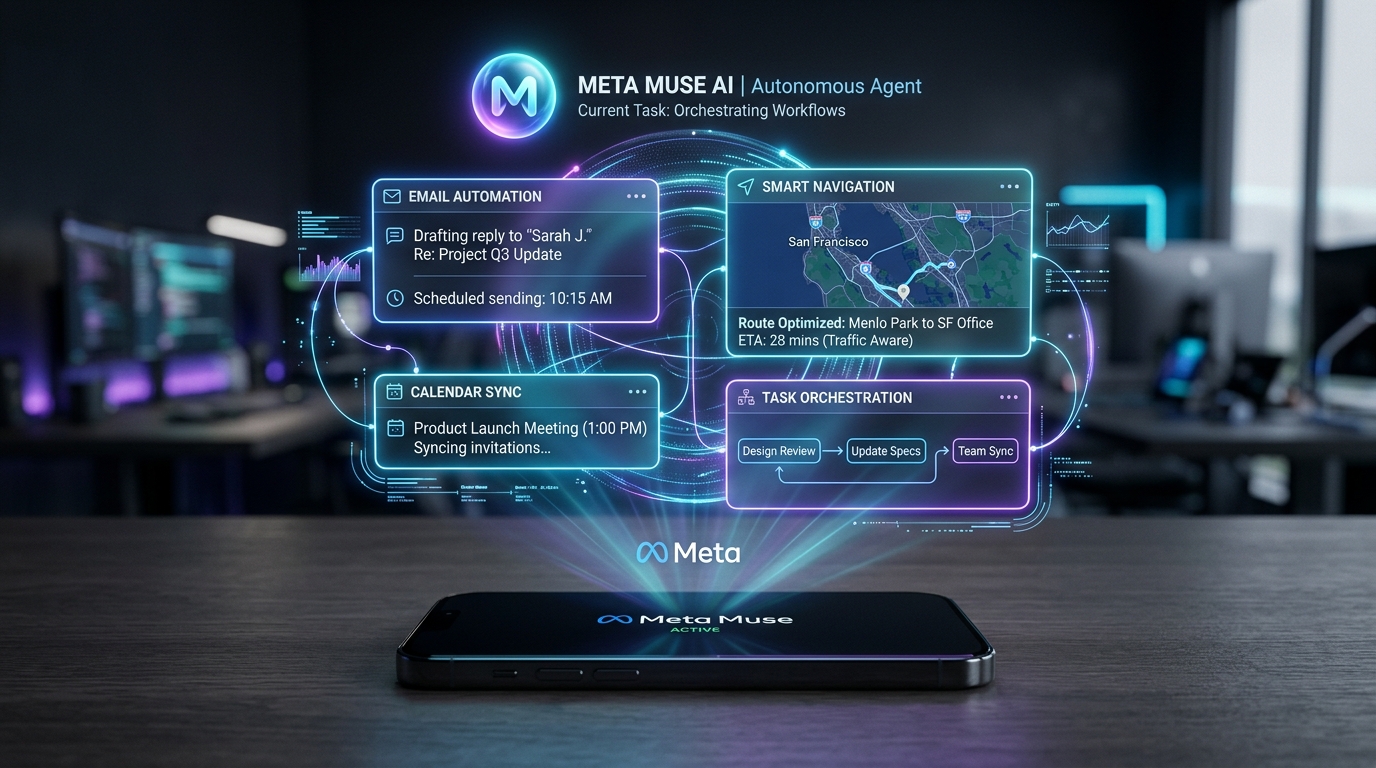
By integrating deep neural foundation models (such as Llama architectures) with client-side operating system hooks, Muse operates as an intelligent middleware layer. It understands intent, decomposes high-level goals into modular actions, and orchestrates actions across supported mobile software suites as outlined in our guide to types of software architecture.
What Is the Meta Muse AI App and How Does It Work?
The meta muse ai app is an agentic software platform that connects directly to your authorized device applications, communication channels, and web services. When given a contextual command—such as “Find a non-stop flight to London next Thursday under $600 and add it to my calendar”—Muse performs the complete operational sequence independently.
The 3-Stage Agentic Pipeline
- Intent Decomposition: Muse parses natural voice or text prompts, breaking complex requests down into sequential API calls and validation checkpoints.
- Contextual API Orchestration: The agent securely queries connected flight aggregators, verifies passport credentials from encrypted storage, and compares pricing tiers.
- Execution and Human Verification: Before finalizing financial transactions, Muse presents a structured confirmation card for explicit biometric approval (Face ID or fingerprint verification).
Cross-Application Workflows: Email, Travel, and Commerce
The true utility of the meta muse ai app lies in its cross-application interoperability. Rather than requiring users to manually copy and paste tracking numbers, dates, and addresses between separate apps, Muse connects disparate software ecosystems into a cohesive automated workflow:
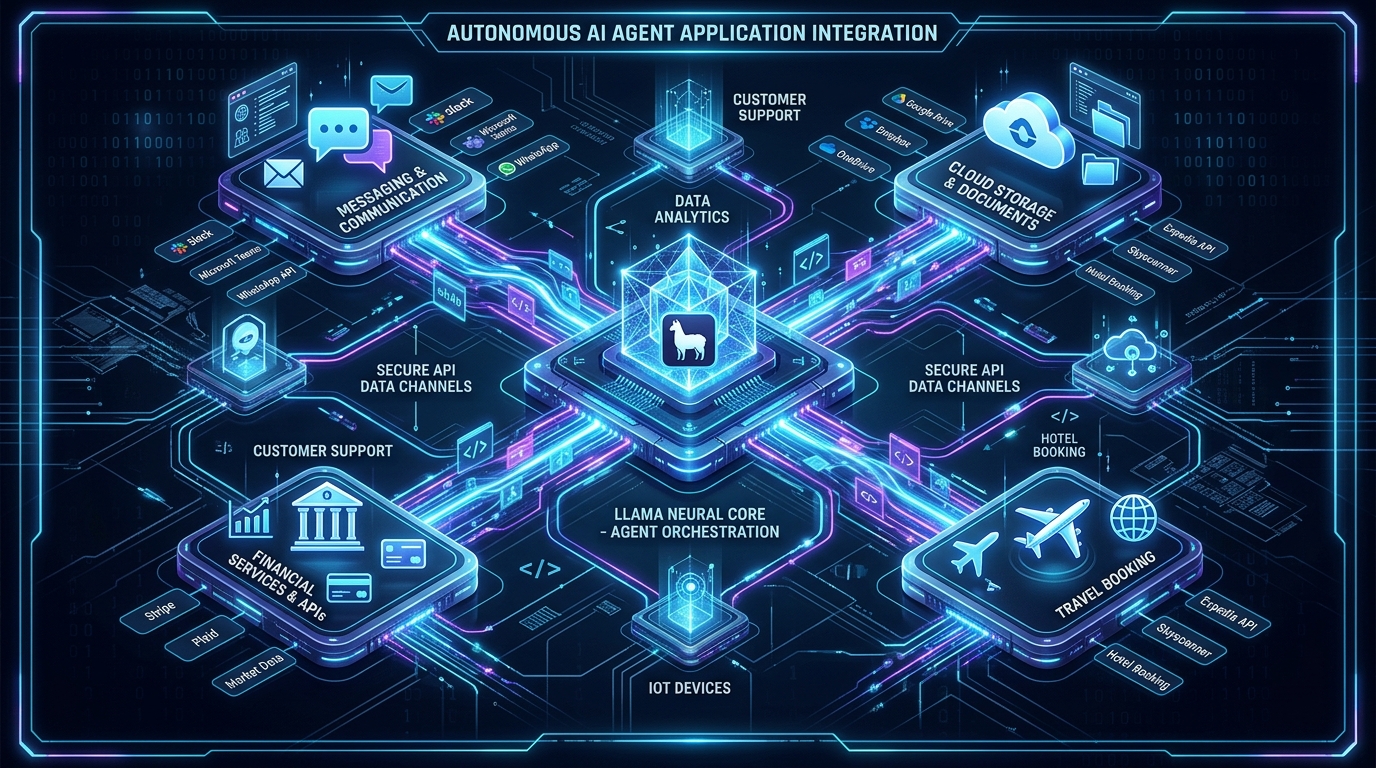
1. Intelligent Email Management
Muse connects with Gmail, Outlook, and Apple Mail to filter incoming messages, draft replies in your personalized communication tone, flag urgent action items, and archive spam promotions automatically.
2. Autonomous Travel & Itinerary Booking
When planning trips, Muse interfaces with travel platforms, airline booking systems, and rideshare services, cross-referencing your personal schedule to reserve hotels and arrange airport transit without manual search friction.
3. E-commerce and Price Tracking
The agent monitors product catalogs across retail platforms, tracking price reductions, comparing shipping timelines, and preparing checkouts when target discounts are triggered.
Integration With WhatsApp and the Meta Ecosystem
A primary competitive advantage for this new assistant is its direct native integration with Meta’s global messaging platforms, particularly WhatsApp, Instagram Direct, and Messenger according to Meta AI research publications.
Users do not necessarily need to open a dedicated standalone application. By engaging Muse directly inside WhatsApp chats, users can send voice notes to trigger complex tasks, receive real-time travel updates, and coordinate group dinner reservations with friends without leaving the active conversation thread.
Privacy Architecture and User Permission Controls
Granting an AI assistant access to personal email, banking APIs, and location data raises critical privacy considerations. The meta muse ai app incorporates multiple security safeguards in accordance with strict international cybersecurity frameworks outlined in our digital privacy and data protection guide:
- Granular Permission Scopes: Users choose exactly which applications Muse can read from and write to, with the ability to revoke access on an individual service level at any time.
- Mandatory Human-in-the-Loop Safeguards: Financial transactions, sensitive email dispatches, and account password modifications strictly require manual biometric confirmation.
- Encrypted API Data Transit: All communications between Muse agent nodes and third-party servers are encrypted via TLS 1.3 cryptographic protocols, preventing data interception.
- Zero-Retention Training Isolation: Meta maintains that private user data processed through Muse workflows is isolated from public foundation model training datasets.
Comparative Matrix: Meta Muse vs Traditional AI Assistants
The comparative matrix below illustrates how this autonomous agent differs from first-generation chatbots and operating system assistants:
| Feature / Capability | Meta Muse AI App | Standard Chatbots (ChatGPT / Claude) | Legacy Siri / Google Assistant |
|---|---|---|---|
| Operational Model | Autonomous Multi-App Agent | Conversational Prompt Engine | Voice-Triggered Command Router |
| Cross-App Execution | Native Multi-Step API Chaining | Limited via Plugins / Browser | Single-App Basic Commands |
| WhatsApp Integration | Deep Native In-Chat Agent | Third-Party Webhooks / None | None |
| Task Autonomy | Decomposes & Executes Goals | Generates Text Answers Only | Executes Simple Linear Scripts |
| Financial Safety Gates | Mandatory Biometric Passcode | N/A (No Direct Checkout) | Apple Pay / Google Pay Auth |
Enterprise and Small Business Productivity Impact
For independent entrepreneurs, creators, and small business owners, the meta muse ai app offers high-leverage operational advantages. Small teams often lose dozens of hours every week to repetitive scheduling, customer inquiry routing, and inventory tracking.
By delegating routine communication and operational scheduling to Muse, business owners can maintain continuous customer response times on WhatsApp while focusing capital and attention on strategic growth initiatives.
Limitations and Early Testing Challenges
Despite its transformative potential, early developer previews of the autonomous platform highlight several technical bottlenecks common across emerging autonomous systems according to academic AI research papers:
- Edge-Case Hallucinations: When navigating complex flight change policies or ambiguous email threads, autonomous agents can misinterpret cancellation penalties without human oversight.
- Third-Party API Rate Limits: External platforms occasionally throttle automated agent queries to protect server stability, causing temporary task delays.
- Phased Regional Rollout: Due to regulatory compliance under the EU AI Act and regional privacy frameworks, advanced features are launching progressively across designated markets.
Frequently Asked Questions About Meta Muse AI App
What is the primary function of the Meta Muse AI app?
The primary function of the meta muse ai app is to act as an autonomous AI agent capable of navigating and executing tasks across connected mobile apps—such as sending emails, booking reservations, and managing calendars—on behalf of the user.
Can Meta Muse make purchases without my permission?
No. Muse features strict human-in-the-loop security protocols that require explicit biometric confirmation (Face ID or fingerprint authorization) before executing any financial transaction.
Is the Meta Muse AI app free to use?
Meta offers core Muse features free of charge within WhatsApp and Meta ecosystem apps, with premium enterprise tiers planned for high-volume automated business workflows.
How does Meta Muse differ from a standard AI chatbot?
Standard AI chatbots only generate text and reply to messages. Meta Muse is an autonomous agent that can take direct actions inside third-party apps, making bookings, organizing files, and executing multi-step tasks.
Conclusion: The Future of Agentic Mobile Software
The meta muse ai app marks a pivotal transition from passive conversational AI toward proactive, autonomous agent ecosystems. By combining seamless WhatsApp accessibility, multi-app API orchestration, and robust biometric security gates, Meta is establishing a powerful foundation for the next generation of mobile software intelligence.
Stay ahead of AI innovations: explore our master guide on autonomous AI agents, discover productivity workflows in best AI productivity tools, or learn about our publication mission on our About Us overview!