Understanding how the internet works is essential for software engineers, network architects, and digital professionals who rely on seamless global connectivity every day. Every time you stream video, execute a financial trade, query an API, or load a webpage, billions of data packets traverse continents in milliseconds through a vast mesh of distributed network protocols.
At its core architecture, how the internet works? It is a decentralized, planetary network of interconnected autonomous systems (AS) communicating via standardized protocols to route digital data packets between billions of client devices and server hosts worldwide.
According to technical specifications from MDN Web Docs: How the Internet Works and standards established by the Internet Engineering Task Force (IETF) Standards, the internet operates on layered modularity. In this comprehensive technical guide, we dissect the TCP/IP suite, DNS lookups, BGP routing, physical undersea cables, and modern CDN architectures.
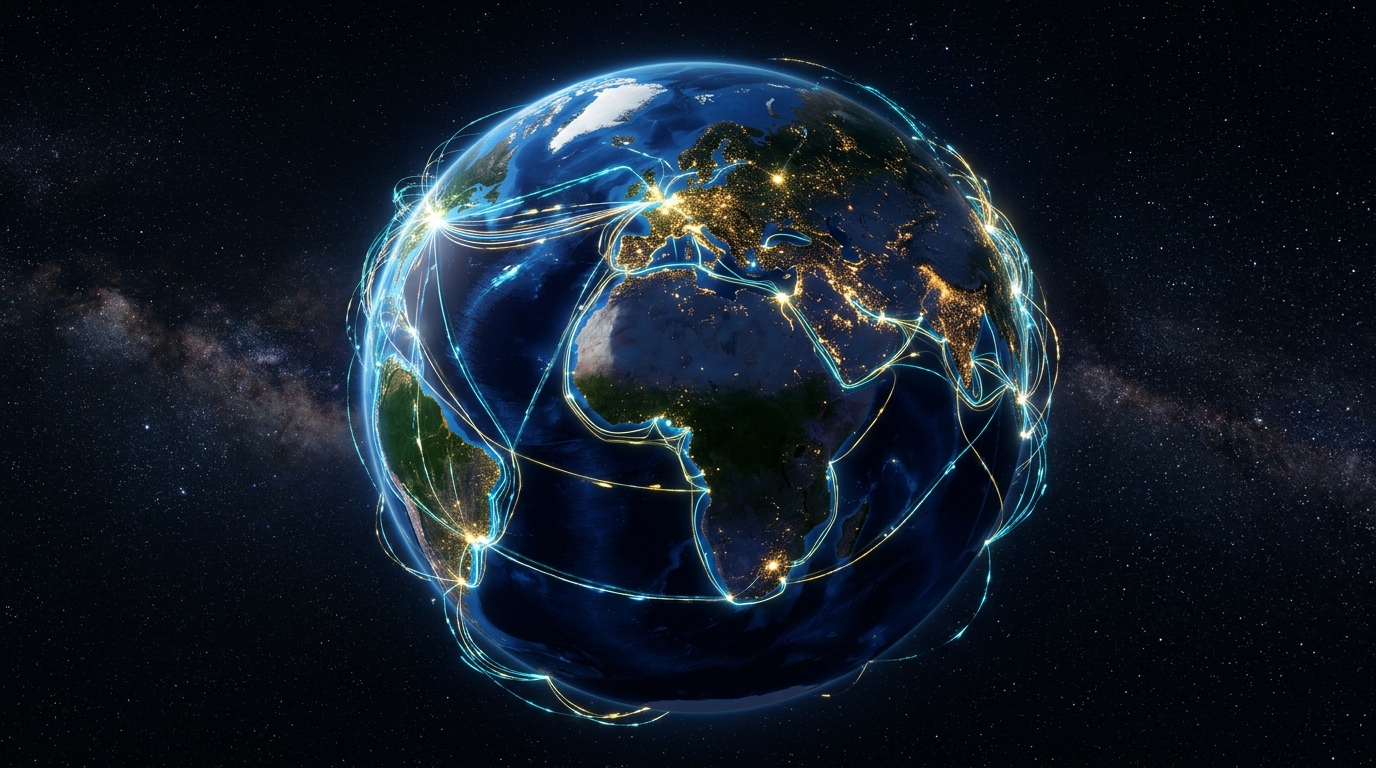
How the Internet Works: The Global Architecture of Connectivity
To fully grasp how the internet works, we must understand that the internet is not a single central computer, but an interconnected network of autonomous networks. Internet Service Providers (ISPs), Tier-1 transit backbones, enterprise networks, and cloud datacenters exchange data using standardized routing policies.
When a client initiates a request, the communication passes from local Wi-Fi or cellular antennas to an ISP gateway, hops across regional routing hubs, traverses high-speed fiber-optic backbones, and reaches remote servers hosted in enterprise cloud computing infrastructure or corporate business technology systems.
The TCP/IP Protocol Suite: The Universal Language of the Web
The foundational protocol stack that dictates how the internet works is the Transmission Control Protocol / Internet Protocol (TCP/IP) suite:
- Internet Protocol (IP): Responsible for addressing and packet delivery. IPv4 utilizes 32-bit addresses (e.g., 192.168.1.1), while IPv6 uses 128-bit hexadecimal addresses to provide trillions of unique identifiers for modern connected devices and smart gadgets.
- Transmission Control Protocol (TCP): A connection-oriented protocol that establishes a reliable three-way handshake (SYN, SYN-ACK, ACK), guarantees packet sequencing, retransmits lost packets, and manages flow control.
- User Datagram Protocol (UDP): A lightweight, connectionless alternative to TCP designed for time-sensitive streams (online gaming, live video calls, DNS lookups) where low latency is prioritized over packet retransmission.
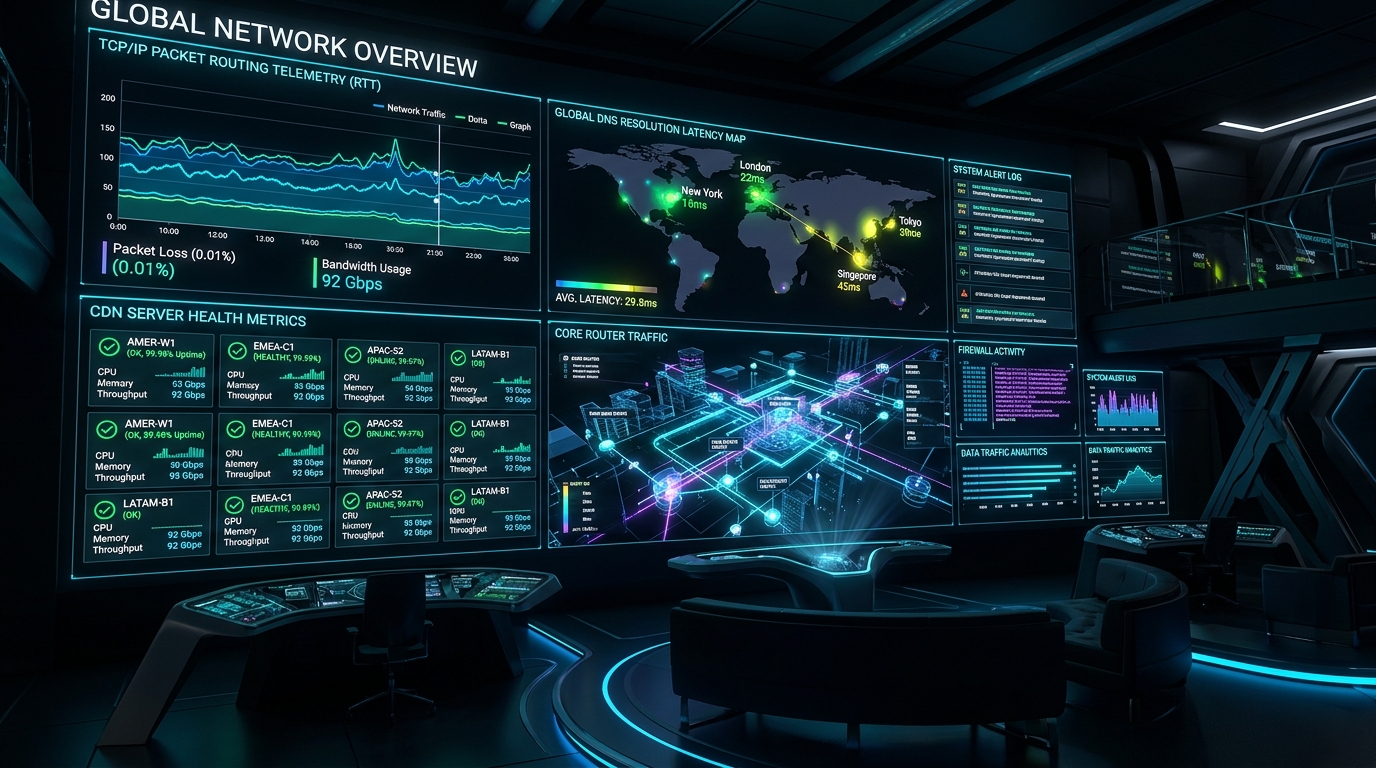
The Domain Name System (DNS): Translating Hostnames to IP Addresses
Computers communicate via numeric IP addresses, but humans remember alphanumeric domain names. The Domain Name System (DNS) operates as the decentralized directory service of the internet.
When you type a URL into your web browser, a hierarchical DNS lookup sequence occurs in under 30 milliseconds:
- DNS Recursive Resolver: The local ISP or public resolver (e.g., 1.1.1.1 or 8.8.8.8) that queries upstream servers on behalf of the client.
- Root Nameservers: 13 global root server clusters that direct queries to the appropriate Top-Level Domain (TLD) nameservers (.com, .org, .net).
- TLD Nameservers: Manage authoritative data for domain extensions and point to the specific authoritative nameserver for the requested domain.
- Authoritative Nameservers: Holds the official DNS resource records (A, AAAA, CNAME, MX) and returns the destination IP address to the resolver.
Packet Switching: How Data Traverses Routers and Switches
The internet relies on packet switching. Large files, video frames, and webpage assets are chopped into standardized chunks called data packets (typically 1,500 bytes under standard MTU configurations).
Each packet contains a header with source IP, destination IP, packet sequence number, and error-checking checksums. Core internet routers inspect packet headers, consult dynamic routing tables using Border Gateway Protocol (BGP) and OSPF, and forward packets along the most efficient electrical or optical path across the global mesh.
The Physical Internet: Undersea Fiber Optic Cables and Internet Exchange Points
While many conceptualize the internet as an invisible cloud, it is fundamentally a massive physical infrastructure. Over 98% of international internet traffic travels through hundreds of thousands of miles of submarine fiber-optic cables laid across ocean floors.
These fiber cables utilize Dense Wavelength Division Multiplexing (DWDM) lasers to transmit hundreds of terabits per second across strands of ultra-pure glass. When landing on coastlines, traffic routes into carrier-neutral Internet Exchange Points (IXPs) where ISPs and cloud hyperscalers peer directly, exchanging massive data volumes without transit fees.
HTTP, HTTPS, and Web Application Delivery Protocols
The application layer delivers human-readable web content across browsers and client devices:
- HTTP/1.1 vs. HTTP/2: HTTP/2 introduced binary framing, multiplexing over single TCP connections, and header compression to eliminate head-of-line blocking.
- HTTP/3 and QUIC: Runs over UDP instead of TCP, eliminating connection handshake latency and packet loss stalls on mobile cellular connections.
- HTTPS (TLS 1.3): Encrypts web traffic using asymmetric key exchange and symmetric AES-256 ciphers, safeguarding online passwords and sensitive user sessions.
Content Delivery Networks (CDNs) and Edge Caching Architecture
Modern websites rarely serve static assets directly from a single origin server. Content Delivery Networks (CDNs) deploy globally distributed Points of Presence (PoPs) to cache images, JavaScript bundles, stylesheets, and video segments near end-users.
By leveraging Anycast BGP routing, client DNS requests resolve to the geographically nearest CDN edge server, reducing round-trip time (RTT) from hundreds of milliseconds to under 10 milliseconds while shielding origin servers from traffic surges.
Internet vs. World Wide Web: Understanding the Distinction
A frequent point of confusion is conflating the Internet with the World Wide Web:
The Internet is the underlying global hardware and routing infrastructure that connects billions of computers. The World Wide Web (WWW) is an application-layer information system running on top of the Internet, utilizing HTTP protocols, HTML markup, and hyperlinks to share interlinked hypermedia documents. Email (SMTP/IMAP), file sharing (FTP/SFTP), gaming networks, and IoT telemetry are services that operate over the Internet without using the Web.
Comparative Matrix: Core Networking Protocols and OSI Layers
The following architectural matrix details how key networking protocols function across standard OSI layers:
| OSI Layer | Core Protocols | Primary Function | Example Technologies |
|---|---|---|---|
| Application (Layer 7) | HTTP, HTTPS, DNS, SMTP, SSH | End-user services & application interfaces | Web Browsers, Email Clients, REST APIs |
| Transport (Layer 4) | TCP, UDP, QUIC | End-to-end process communication & reliability | Port Addressing (80, 443, 53), Flow Control |
| Network (Layer 3) | IPv4, IPv6, ICMP, BGP, OSPF | Logical packet addressing & global path routing | Core Routers, IP Subnets, Transit Gateways |
| Data Link (Layer 2) | Ethernet, Wi-Fi (802.11), PPP | Physical frame framing & local media access | Network Switches, MAC Addresses, APs |
| Physical (Layer 1) | Fiber Optics, Copper DSL, Submarine Cables | Transmission of raw binary electrical/optical bits | DWDM Lasers, Transceivers, Cat6 Cables |
Network Security: BGP Routing, TLS 1.3 Encryption, and DDoS Defense
Securing the global routing infrastructure is a continuous challenge for network engineers:
As explored in our deep dives into what is cybersecurity and what is digital privacy, modern networking defense requires Resource Public Key Infrastructure (RPKI) to prevent BGP route hijacking, automated DDoS scrubbing centers, and universal end-to-end encryption to protect user data from packet sniffing.
Frequently Asked Questions: How the Internet Works (FAQs)
What is the difference between the Internet and the World Wide Web?
The Internet is the global physical and logical networking infrastructure connecting computers together, whereas the World Wide Web is an application system of interlinked web pages and media running over that Internet infrastructure.
How does DNS resolve a domain name into an IP address?
A DNS recursive resolver queries root nameservers, TLD nameservers, and authoritative nameservers in sequence to find the destination IP address mapped to the requested domain name in milliseconds.
What are data packets in Internet communication?
Data packets are small, standardized units of digital information containing payload data and routing headers (source IP, destination IP, sequence number) that travel independently across network routers.
How do undersea fiber optic cables carry global Internet traffic?
Undersea fiber cables use high-precision laser beams pulsed through strands of ultra-pure glass to transmit terabits of optical data per second across ocean floors at nearly the speed of light.
Summary & Key Takeaways: The Foundation of the Digital Economy
Mastering how the internet works provides the foundational architectural clarity required to build resilient cloud architectures, scalable web applications, and secure digital platforms. By understanding how data moves from local client devices across global fiber backbones to remote cloud datacenters, engineers can optimize performance and ensure maximum reliability.
To explore more technical analyses on emerging technologies and infrastructure, visit our what is emerging technology guide and check our About Us overview.