Augmented reality hardware is experiencing a seismic technological breakthrough, and the official introduction of Snap SPECS marks the most ambitious leap forward in standalone spatial computing glasses. Moving beyond basic camera sunglasses and tethered VR headsets, these fifth-generation smart glasses deliver true see-through optical AR powered by bespoke spatial operating software and cutting-edge artificial intelligence.
Equipped with dual Liquid Crystal on Silicon (LCoS) micro-projectors, custom optical waveguides, and multimodal generative AI integration, Snap SPECS enable users to overlay interactive digital geometry, live linguistic translations, and context-aware computational assistants onto the physical world in real time without reaching for a smartphone.
Table of Contents
Table of Contents
- What Are Snap SPECS? Spatial Hardware and SnapOS Overview
- Multimodal AI Features and Real-Time Visual Intelligence
- Live Language Translation and Contextual Spatial Navigation
- Hardware Specifications: Waveguides, Silicon, and Thermal Architecture
- Comprehensive Comparison Matrix: Snap SPECS vs Meta Ray-Ban vs Apple Vision Pro
- Developer Ecosystem: Lens Studio Integration and Enterprise Pricing
- Privacy, Surveillance Concerns, and Sensor Security Safeguards
- Expert Verdict: What Snap SPECS Mean for Everyday Computing
- Frequently Asked Questions About Snap SPECS
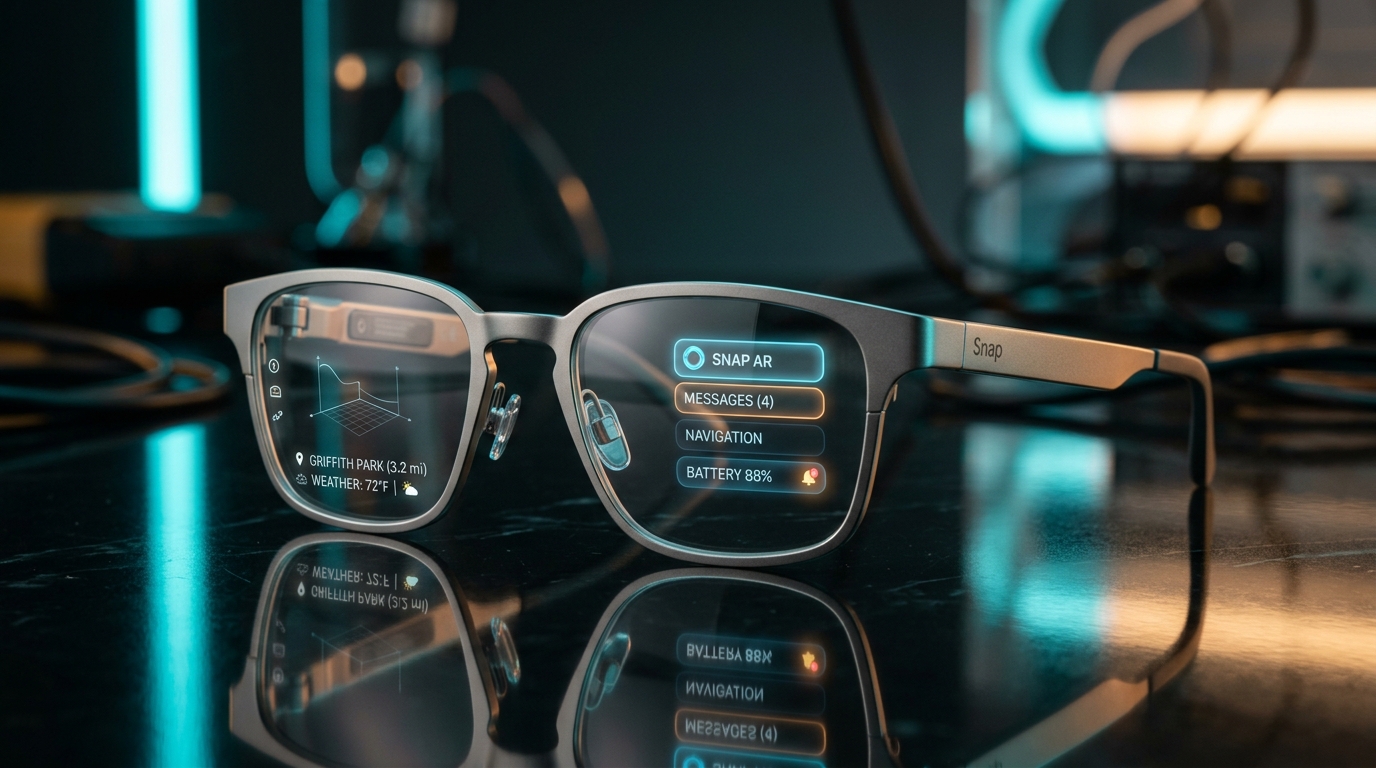
What Are Snap SPECS? Spatial Hardware and SnapOS Overview
The fifth-generation Snap SPECS represent a radical departure from conventional heads-up displays. Built as a self-contained spatial computing device, these smart glasses eliminate the need for cumbersome external compute pucks or wired connections to a PC. Everything required for six-degree-of-freedom (6DoF) motion tracking, optical rendering, and wireless connectivity is integrated directly into the lightweight frame architecture.
At the core of the system is SnapOS, a specialized operating system engineered specifically for optical see-through augmented reality. According to technical announcements from Snap Newsroom, SnapOS leverages a natural spatial user interface driven entirely by intuitive hand gestures and conversational voice prompts. Users can pinch, drag, and pin interactive holographic widgets to physical walls or tables, creating persistent multi-window computing workspaces anywhere.
For designers and developers managing digital assets for modern web experiences, check our Developer Tools Hub and Unit Converter Calculator for precise display calculations.
Multimodal AI Features and Real-Time Visual Intelligence
What truly elevates Snap SPECS in 2026 is its deep integration with state-of-the-art multimodal AI foundation models. Through strategic partnerships with leading AI research labs, Snap has embedded real-time visual comprehension directly into the glasses’ camera pipeline.
Unlike standard audio-only smart glasses that rely solely on spoken descriptions, the multimodal AI engine inside Snap SPECS can see and interpret the wearer’s physical environment in real time. Key artificial intelligence capabilities include:
- Instant Object Recognition and Contextual Synthesis: Wearers can glance at an unfamiliar plant, electronic component, or architectural structure and ask, “What is this and how does it work?” The glasses parse the image frame, query cloud and on-device neural networks, and render informative 3D callout graphics directly beside the object.
- Real-Time Step-by-Step Guidance: Whether troubleshooting mechanical hardware, assembling modular furniture, or following culinary recipes, the AI highlights specific components and projects animated arrows indicating precisely which tool or fastener to use next.
- Conversational Memory: The system maintains contextual awareness of recent visual interactions, enabling seamless follow-up inquiries without requiring repetitive prompting.
As documented by independent hardware analysts at The Verge, this real-time contextual awareness bridges the gap between passive wearable accessories and true proactive personal intelligence agents.
Live Language Translation and Contextual Spatial Navigation
International travel, multicultural business meetings, and navigation are completely reimagined through the optical projection system of Snap SPECS. By combining dual noise-canceling beamforming microphones with computer vision, the glasses perform low-latency live language translation.
When listening to a speaker in another language—such as Japanese, Spanish, German, or Mandarin—translated subtitles hover smoothly beneath the speaker’s face in the wearer’s peripheral field of view. Simultaneously, the onboard optical character recognition (OCR) engine translates foreign street signs, train schedules, and restaurant menus in-place, visually replacing foreign text with translated text aligned with the physical surface.
For spatial navigation, Snap utilizes its planetary-scale City-Scale Mesh mapping database. Instead of looking down at a mobile map on a smartphone, 3D animated directional arrows appear dynamically painted across sidewalks and roadways, providing continuous turn-by-turn guidance directly within the user’s natural gaze.
Hardware Specifications: Waveguides, Silicon, and Thermal Architecture
Engineering a high-performance augmented reality system into an everyday eyewear form factor presents extreme physical and thermal constraints. Snap solved these challenges through custom silicon co-processing and advanced optical materials.
- Optical Engine: Dual Liquid Crystal on Silicon (LCoS) light engines paired with precision diffraction waveguides offering up to 2,000 nits of peak brightness for crisp outdoor legibility.
- Field of View (FOV): 45-degree diagonal field of view with an ultra-sharp 45 pixels-per-degree (PPD) optical clarity rating.
- Compute Platform: Dual Qualcomm Snapdragon XR processors coupled with dedicated custom neural co-processors designed to distribute tracking algorithms and visual pipelines across multiple silicon cores.
- Thermal Management: Ultra-thin titanium vapor chambers embedded within the temples dissipate heat efficiently away from the wearer’s temples and skin.
- Weight and Comfort: Weighing approximately 134 grams, the chassis distributes mass evenly across the nose bridge and ear stems for extended developer wearability.
To stay updated on cutting-edge hardware breakthroughs and industry shifts, browse our latest stories in Gadget News and Product Announcements.
Comprehensive Comparison Matrix: Snap SPECS vs Meta Ray-Ban vs Apple Vision Pro
To understand where Snap SPECS fit in the broader spatial computing landscape, the comparison matrix below outlines core specifications, display architectures, and target use cases against leading industry alternatives:
| Feature / Specification | Snap SPECS (5th Gen) | Meta Ray-Ban Smart Glasses | Apple Vision Pro | Magic Leap 2 |
|---|---|---|---|---|
| Display Technology | See-through LCoS Waveguides | No Display (Audio/Camera only) | Micro-OLED Video Passthrough | Diffractive Waveguide LCoS |
| Field of View (FOV) | 45° Diagonal | N/A | ~100° (Immersive Passthrough) | 70° Diagonal |
| Primary Interaction | Hand Tracking & Voice AI | Voice AI & Touchpad | Eye Tracking & Hand Pinch | 6DoF Controller & Hand |
| Form Factor & Weight | Glasses (~134g) | Standard Glasses (~49g) | Mixed Reality Headset (~600g) | Headset + Puck (~260g) |
| Standalone Compute | Yes (Dual Snapdragon XR) | Yes (Snapdragon AR1 Gen1) | Yes (Apple M2 + R1 Chips) | External Pocket Compute Puck |
| Software Platform | SnapOS (Lens Studio) | Meta AI Assistant | visionOS | Android-based Custom OS |
| Primary Target | AR Developers & Creators | Everyday Consumers | Prosumers & Spatial Devs | Enterprise & Healthcare |
| Pricing Model | $99/month (Developer Plan) | $299 Retail Purchase | $3,499 Retail Purchase | $3,299 Retail Purchase |
Developer Ecosystem: Lens Studio Integration and Enterprise Pricing
Unlike traditional consumer product releases, Snap has prioritized an open, vibrant developer ecosystem for the launch of Snap SPECS. Through Snap’s flagship development suite, Lens Studio, software creators can build, simulate, and deploy interactive spatial experiences within minutes.
Developers gain direct access to powerful spatial APIs, including:
- Spatial Hand Tracking: Low-latency 26-point joint articulation recognition for natural virtual object manipulation and holographic typing.
- Connected Lenses: Multi-user shared augmented reality experiences where multiple wearers can view and collaborate on identical 3D digital objects simultaneously.
- Open AI API Connectors: Direct integration hooks for OpenAI, Google Gemini, and custom enterprise Large Language Models (LLMs).
As covered by Reuters, Snap offers the glasses under a developer subscription model priced at $99 per month (with a 12-month commitment). This program ensures active builders receive continuous firmware upgrades, dedicated engineering support, and access to new Lens Studio toolkits prior to broader consumer retail deployment.
Privacy, Surveillance Concerns, and Sensor Security Safeguards
Wearable computing devices equipped with high-resolution cameras and environmental sensors inevitably raise critical privacy considerations. Digital rights organizations such as the Electronic Frontier Foundation (EFF) emphasize that continuous environmental capture must be matched with transparent user controls and visible recording indicators.
To address public surveillance and biometric privacy concerns, Snap engineered multi-layered security safeguards into Snap SPECS:
- Hardwired Capture LEDs: Whenever spatial cameras or video recording sensors are active, outward-facing bright white LED rings illuminate automatically. This mechanism is physically wired to the sensor power rails to prevent software-level bypassing or covert recording.
- Local On-Device Processing: Eye tracking telemetry, spatial room geometry, and immediate hand tracking meshes are computed locally inside the Qualcomm silicon secure enclave and are never uploaded to remote servers without explicit user permission.
- Encrypted Media Pipelines: Video captures and AI interaction histories stored on the device utilize AES-256 cryptographic hardware encryption.
For more software architectures and security analysis, explore our in-depth guides in Software News and Industry News.
Expert Verdict: What Snap SPECS Mean for Everyday Computing
The fifth-generation Snap SPECS prove that true optical augmented reality is no longer confined to laboratory prototypes or bulky helmets. By packaging dual see-through waveguides, hand tracking, and multimodal AI into a self-contained 134-gram frame, Snap has established a compelling benchmark for the future of wearable technology.
While mainstream consumer adoption will ultimately depend on reducing physical weight under 80 grams and extending continuous battery life beyond 45 minutes of heavy 3D rendering, the developer ecosystem thriving on SnapOS today is laying the essential software foundation. For creators, technologists, and forward-thinking enterprises, Snap SPECS deliver our clearest, most tangible preview of post-smartphone computing.