Digital marketing has become one of the most important ways for modern businesses to reach customers, build brand awareness, and generate sustainable revenue. Whether you run a local business, an ecommerce store, a tech startup, or a personal brand, having a high-performing digital marketing strategy is essential to succeed online in 2026.
Instead of relying on disconnected campaigns, a successful digital marketing strategy unites search engine optimization, content creation, social media channels, targeted paid advertising, automated email sequences, and data analytics into a synchronized growth engine.
In this comprehensive guide, we explain what a digital marketing strategy is, explore its seven foundational pillars, examine the latest AI automation tools, and provide a step-by-step roadmap for beginners and growing businesses.

Table of Contents
What Is a Digital Marketing Strategy? Core Definition
A digital marketing strategy is a structured master plan for reaching target audiences, acquiring qualified leads, and converting them into paying customers through digital touchpoints.
Unlike random promotional tactics, an effective digital marketing strategy establishes measurable KPIs, identifies customer personas, maps out the entire conversion funnel, and allocates resources efficiently across organic and paid channels.
| Marketing Pillar | Core Focus | Key Advantage | Ideal Tools |
|---|---|---|---|
| Search Engine Optimization (SEO) | Organic Search Visibility | Long-Term Compounding Traffic | Google Search Console, Ahrefs |
| Content Marketing | Education & Authority | Builds Consumer Trust | WordPress, Notion, Canva |
| Paid Advertising (PPC) | Immediate Lead Generation | Instant Scalability & Precision | Google Ads, Meta Ads Manager |
| Social Media Marketing | Community & Brand Awareness | Two-Way Customer Engagement | LinkedIn, Instagram, YouTube |
| Email Marketing & Automation | Customer Retention & Nurturing | Highest Direct Marketing ROI | Klaviyo, Mailchimp, HubSpot |
Why a Digital Marketing Strategy Is Crucial in 2026
Modern consumers research extensively before making purchasing decisions. Deploying a structured digital marketing strategy delivers distinct advantages:
- Global and Local Reach: Connect with prospective buyers across international borders or target customers within specific geographic zip codes.
- Granular Audience Targeting: Utilize behavioral data and intent signals tracked via platforms like Google Marketing Platform to serve personalized messages.
- Real-Time Performance Tracking: Audit campaigns continuously to double down on high-ROI channels while pruning underperforming ad spend.
- Compounding Brand Equity: Consistent organic content and SEO build long-term digital real estate that lowers customer acquisition costs over time.
The 7 Core Pillars of a Digital Marketing Strategy
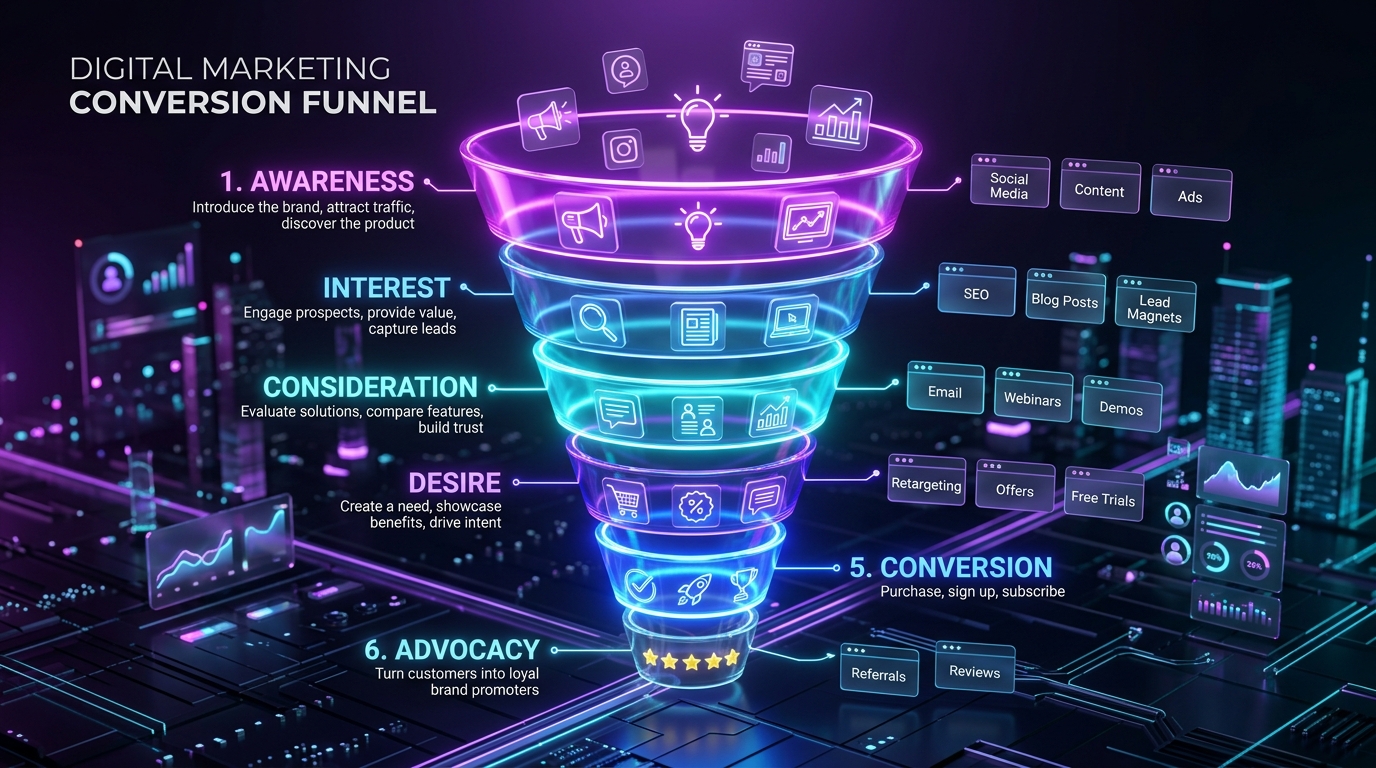
1. Search Engine Optimization (SEO)
SEO represents the backbone of any organic digital marketing strategy. By conducting keyword research, implementing clean technical on-page architecture, and earning high-authority backlinks, your website captures users at the exact moment they search for solutions.
2. High-Value Content Marketing
Content is the vehicle that educates and persuades your target market. Publishing authoritative articles, case studies, and comparison guides establishes topical authority and powers your distribution across all other channels.
3. Pay-Per-Click (PPC) and Performance Advertising
Paid advertising delivers predictable, immediate traffic. Search ads capture high-intent commercial keywords, while social display ads introduce your brand to relevant demographics based on detailed interest graphs.
4. Social Media Marketing and Community Building
Social media allows businesses to engage in two-way conversations with their audience. Building a vibrant community on platforms like LinkedIn and YouTube fosters brand loyalty and social proof.
5. Email Marketing and Automated Funnels
Email remains the highest-ROI channel in digital commerce. Setting up automated onboarding sequences, cart abandonment reminders, and value-packed newsletters ensures consistent customer retention.
6. AI Automation and Marketing Workflows
In 2026, leading marketing teams integrate the best AI productivity tools to automate content drafting, audience segmentation, and performance reporting. Furthermore, deploying autonomous systems like AI agents streamlines lead triage and customer CRM updates automatically, powered by architectures detailed in our guide on generative AI explained.
7. Web Analytics and Conversion Rate Optimization (CRO)
A sophisticated digital marketing strategy relies on behavioral telemetry from tools like HubSpot Digital Academy to run A/B split tests on landing pages, maximizing lead capture rates from existing visitors.
How to Build Your Digital Marketing Strategy in 5 Steps
- Define SMART Business Objectives: Establish clear targets (e.g. acquire 500 qualified leads per month with a CAC threshold).
- Construct Detailed Buyer Personas: Document the pain points, preferred online hangouts, and purchasing criteria of your ideal customer.
- Select Primary Acquisition Channels: Focus deeply on 2-3 channels where your target audience is most active rather than spreading resources thin.
- Develop a Consistent Content Calendar: Plan weekly articles, newsletters, and social assets that deliver tangible value.
- Audit and Optimize Regularly: Review monthly metrics, cut unprofitable ad spend, and scale winning campaigns.
Frequently Asked Questions: Digital Marketing Strategy (FAQs)
What is the difference between a digital marketing strategy and marketing tactics?
A digital marketing strategy is the overarching long-term plan and business objective, while tactics are the individual actions (such as publishing a blog post or running a specific Meta ad) used to execute that strategy.
How much budget does a beginner need for digital marketing?
You can begin executing a digital marketing strategy with zero advertising budget by focusing on organic SEO, high-quality content creation, and social community networking before reinvesting profits into paid channels.
Final Verdict on Digital Marketing Strategy for 2026
Building a resilient online brand requires patience, consistency, and a disciplined approach. By aligning your digital marketing strategy with customer intent and leveraging modern AI workflows, your business can achieve predictable and profitable growth.
To learn more about our digital growth frameworks, visit our About Us page or subscribe to our newsletter for weekly insights!